
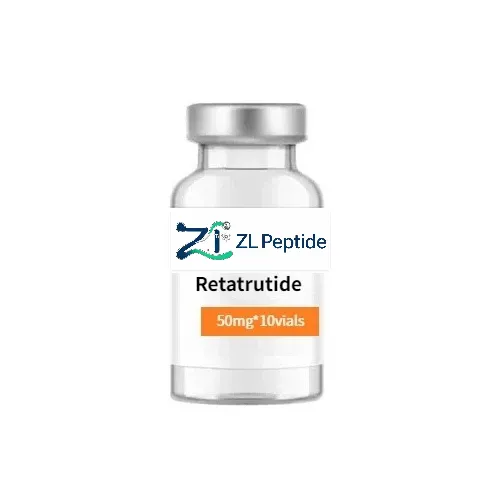
Peptide Factory Starts Round-the-Clock Runs as Lab Demand Tightens Supply
A new peptide factory at the eastern end of the town's industrial park began round-the-clock production this month, adding about 40 percent to the region's custom synthesis capacity at a time when research labs wait longer for routine sequences.
The site, run by a private supplier that has assembled research reagents for a decade, holds twelve synthesis reactors, four purification skids and a freeze-drying suite. Managers say the first three lines reached steady output in mid-November, after eleven months of commissioning.
"Half speed until our own lab could repeat every batch record without a deviation," said Marek Zielinski, the plant's operations director. "Only then did we hand the lines over to the shift teams."
Nine in ten orders leaving the dock are research-grade material bound for university labs and reagent distributors. A smaller share goes to formulators who buy peptide ingredients for personal-care products. The site does not produce finished drug products and holds no licence to do so, a distinction its managers repeat in every customer call.
Sales staff quote a lead time and a specification sheet; they do not ask what a buyer intends to do with the material. Purchase orders carry a use-restriction clause, and the quality team keeps batch records, chain-of-custody logs and instrument logs for five years. Third-party audits run twice a year.
Inside the quality lab, two mass spectrometers and six chromatography units check purity on every lot before release. A batch that misses its specification is reworked or rejected, never blended into a passing lot, the site's technical lead said.
Orders now arrive from Germany, Japan and Korea alongside long-standing European accounts. Longer waits pushed quotes for custom sequencing from about six weeks last year to ten this autumn, according to two distributors in the region. The new capacity is meant to pull that back under four weeks by spring.
"Lead time is the whole conversation now," said a purchasing manager at an independent reagent distributor, who asked not to be named because supply contracts are under negotiation. "Customers used to ask about price first. Now they ask when it ships."
Raw material costs have moved the other way. Protected amino acids have climbed for three straight quarters, and the plant has absorbed most of the increase rather than reprice standing orders, its commercial director said.
Hiring has been the slower half of the project. The plant employs 68 people, 41 of them recruited from nearby towns, and runs a six-month training arrangement with a technical college in the next town.
A second phase, filed with the local planning office in September, would add two lines and a larger cold-storage hall by mid-2027. Officials declined to give an investment figure.
The visible change is the loading dock: pallets leave six days a week instead of three, and the freezer room runs at minus twenty degrees. The peptide factory that spent last winter as a construction site now has a backlog, a shift roster and a waiting list of its own.
ZL PEPTIDE
Professional generator set manufacturer
24/7 before-sales and after-sales services
Comprehensive technical support